Analysis of the characteristics and source of heavy metal pollution in human hair from different regions
Author:南京维百瑞生物科技有限公司
Click:
Time:2020-10-12 14:22:24
Author: Li Bai
Presentation unit: Jilin Jianzhu University
Chinese Core Journal: China Environmental Monitoring
The acceleration of urbanization and the improvement of economic level have caused serious environmental pollution. Heavy metal pollution is one of them. Heavy metals are a type of difficult-to-degrade inorganic pollutants that are widespread in the environment. They are widely distributed in the atmosphere, water, soil, and organisms through industrial pollution, agricultural pollution, and transportation. They have strong bioaccumulation capacity and cannot After being degraded, it can enter the human body directly through channels such as diet and breathing, and seriously threaten the human nervous system, blood system, reproductive system, immune system, etc. Heavy metal pollution has caused a certain degree of harm to the population in different regions: 2002-2008 Foshan air lead pollution caused 52 patients with anemia to be treated with lead poisoning; in 2006, 614 cases of children’s whole blood trace element test results in Shaoyang showed zinc deficiency and The problem of high lead is relatively prominent; in 2013, a questionnaire survey of children with lead poisoning conducted by Xinhua Hospital of Shanghai Jiaotong University School of Medicine showed that the main sources of lead poisoning in children are industrial pollution sources and domestic pollution sources. Therefore, it is very necessary to carry out the risk assessment of heavy metals to human health
Studies have found that the exposure dose of heavy metals in the human body and the overall level of various heavy metal elements in the body can be reflected by the heavy metal content in blood, urine, and hair. Hair is a good indicator of human exposure to certain toxic elements. Compared with blood and urine, it is stable in nature, easy to collect, transport, and store. It has been recommended by the World Health Organization (WHO), the United States Environmental Protection Agency (USEPA) and the International Atomic Energy Agency (IAEA) as a worldwide development environment An important biological material for monitoring.
Affected by the geological environment, dietary habits and individual differences in populations, there are certain differences in the degree of heavy metal enrichment in different geographical environments and human bodies. Based on this article, China is divided into northeast, northwest, southwest, north, south, central, 7 regions in East China. Taking a freshman in a university as the collection object, by measuring the content of five heavy metals in human hair, chromium, copper, nickel, lead, and zinc, the enrichment characteristics of heavy metals in human hair samples of different regions, different genders and different body types are studied and carried out Correlation analysis
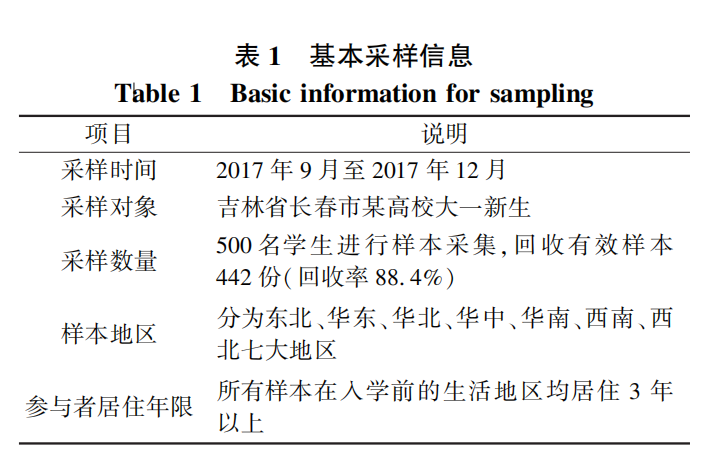
This study divides the study area into seven regions: Northeast, Northwest, Southwest, North China, South China, Central China, and East China according to factors such as geographic location, economic and industrial development. Analysis of chromium, copper, nickel, lead, and zinc in samples from different regions Content characteristics, the results are shown in Table 2. The content of heavy metals in human hair varies greatly in different regions.
The sequence of chromium concentration is Southwest>East China>Northeast>Northwest>Central China>North China>South China;
The order of copper concentration is North China>Southwest>East China>Central China>Northeast>Northwest>South China;
The order of nickel concentration is East China>Southwest>Central China>North China>South China>Northwest>Northeast;
The order of lead concentration is Northwest>Southwest>Northeast>Central China>East China>South China>North China;
The order of zinc concentration is Northeast>East China>Northwest>North China>Central China>South China>Southwest
The order of the total concentration of the five heavy metals is Northeast>East China>North China>Northwest>Central China>Southwest>South China
It can be seen that the Northeast region is seriously polluted by heavy metals. The long heating period for the old industrial base in this area will cause serious air and water pollution.
The second is that the environmental pollution caused by the economically developed industries in the East China region as a whole will seriously affect human health than the leading industries and transportation industries in other regions. The metal smelting, energy and heat industries in the North China region are more concentrated, and heavy metals may come from this.
The concentration of the five heavy metal elements in the samples from all regions is zinc>lead>copper>nickel>chromium; the concentration level of zinc is the highest among the five elements, and too high or too low zinc as an essential element may cause diseases. As an essential element for the human body, excessive or low content of zinc may cause diseases. The normal range of zinc content in hair published by IAEA is 138~308μg/g; the zinc content in most hair samples in this study is lower than this standard value, indicating that residents Zinc deficiency is more common. Researchers have proposed that the upper limit of normal human hair lead exposure to non-occupational lead is 30-40ug/g. The sample data of this study shows that the lead concentration in samples from all regions is higher than the upper limit, indicating that lead pollution is more serious and there is a higher risk of exposure. Lead in the environment mainly comes from related industrial production such as industrial emissions from lead and other metal ore mining, smelting, metallurgy and other industrial emissions, as well as emissions from gasoline and coal combustion. Different regions and different dietary habits also have a great influence on hair lead content; copper and zinc are also essential elements for the human body. The normal range of hair copper content published by IAEA is 9.6-20.6ug/g. The copper content of the samples collected and issued in this study is mostly higher than the upper limit of the normal value, indicating that people have different levels of copper exposure risks. There is no relatively uniform or formal concentration limit for nickel and chromium. Compared with the research conclusions of relevant documents, the concentration of nickel and chromium in the samples of this study is relatively high. Ore mining, smelting, and related industrial processing processes all produce nickel and chromium-containing waste gas, waste water, and waste residues that enrich them in the environment or the human body. Therefore, ore mining may be a source of exposure to nickel and chromium.


PHONE:400-863-8520
MAILBOX:order@bestofbest.top
ADDRESS:Room 113, Building 29, Jiangsu Life Science and Technology Park, No. 9 Weidi Road, Xianlin Street, Qixia District, Nanjing
SUBMIT DEMAND
版权所有:南京维百瑞生物科技有限公司 宁ICP备 :12345678号 Powered by:YUNHAIWEB
 客服1
客服1 客服2
客服2